You open the fridge, see half a pepper, three eggs, some yoghurt and a bag of spinach, close it again, and order takeaway. It happens to everyone. The problem is rarely a lack of food. It's not seeing the meal hiding in what you already have.
This guide gives you a simple, repeatable method for cooking from your fridge. It works whether you have ten minutes or an hour, and it will help you throw away less food every week.
Why "cook from the fridge" is worth learning
Most food that gets thrown away at home isn't spoiled because it was bad. It's forgotten: the coriander at the back, the cooked rice from Sunday, the courgette that went soft. Planning meals around what you already own fixes that in three ways:
- You spend less. Every ingredient you use up is one you don't buy twice.
- You waste less. Food gets eaten while it's still good.
- You decide faster. Starting from a short list of ingredients is easier than choosing from every recipe on the internet.
Step 1: Take a quick inventory
Before thinking about recipes, spend one minute listing what you have. Sort it into four groups:
- Protein: eggs, chicken, tofu, tinned beans, lentils, fish, cheese, Greek yoghurt.
- Vegetables and fruit: anything fresh, frozen or tinned.
- Base: rice, pasta, bread, potatoes, wraps, oats, noodles.
- Flavour: garlic, onions, spices, soy sauce, mustard, pesto, lemon, herbs.
Write down the items that need using first, like soft vegetables or opened packs, and put them at the top of the list. Those are your starting point.
Tip: your freezer and cupboard count too. Frozen peas, a tin of chickpeas or a jar of passata can turn a few leftovers into a full meal.
Step 2: Pick one protein and one base
Almost every satisfying meal is a protein plus a base, with vegetables and flavour on top. Choose one of each from your list, starting with whatever needs using first:
- Eggs + bread → shakshuka, frittata, egg-fried toast
- Chicken + rice → fried rice, rice bowls, a quick curry
- Tinned beans + wraps → burritos, quesadillas
- Lentils + potatoes → a hearty stew or dal with roasted potatoes
- Tofu + noodles → stir-fry
Step 3: Choose a "format" that forgives anything
Some dishes are built for mixing whatever you have. Learn these formats and you can cook almost any combination:
Stir-fry
Hot pan, a little oil, protein first, then the hardest vegetables, then the softer ones. Finish with soy sauce, garlic and something sour like lime or rice vinegar. Serve with rice or noodles.
Frittata or omelette
Eggs bind everything together. Fry leftover vegetables, pour in beaten eggs, add cheese, and finish under the grill or with a lid on the pan.
Grain or rice bowl
A base, a protein, raw or roasted vegetables, and a sauce. Yoghurt with lemon and garlic, or peanut butter with soy and lime, makes almost anything taste finished.
Soup
Onion, garlic, any vegetables, stock and a handful of lentils or beans. Blend it or leave it chunky. Soup is the best home for vegetables that have gone a little soft.
Pasta
Pasta goes with nearly everything: wilted greens, a tin of tomatoes, a spoon of pesto, leftover roast vegetables, a little cheese.
Step 4: Fill the gaps with flavour
A meal made from leftovers tastes "complete" when it has a balance of:
- Salt: soy sauce, parmesan, olives, stock.
- Acid: lemon, lime, vinegar, yoghurt, tomatoes.
- Fat: olive oil, butter, cheese, nuts, avocado.
- Heat or aroma: chilli, garlic, ginger, fresh herbs, spices.
If something tastes flat, it's usually missing salt or acid. Add a squeeze of lemon before you reach for more ingredients.
Step 5: Check it fits your diet
If you follow a specific diet or have allergies, check every ingredient against it before you start. A vegetarian frittata becomes vegan with chickpea flour instead of eggs. A gluten-free stir-fry needs tamari instead of regular soy sauce. Swapping is usually easy once you know what to look for.
Five fridge meals to start with
| Ingredients you have | Meal | Time |
|---|---|---|
| Eggs, spinach, cheese, bread | Spinach and cheese omelette with toast | 10 min |
| Cooked rice, frozen peas, eggs, soy sauce | Egg fried rice | 15 min |
| Tinned chickpeas, tomatoes, onion, spices | Chickpea curry with rice | 25 min |
| Pasta, tinned tuna, lemon, any greens | Lemon tuna pasta | 15 min |
| Potatoes, yoghurt, any vegetables | Roasted vegetables and potatoes with garlic yoghurt | 35 min |
Let an app do the matching for you
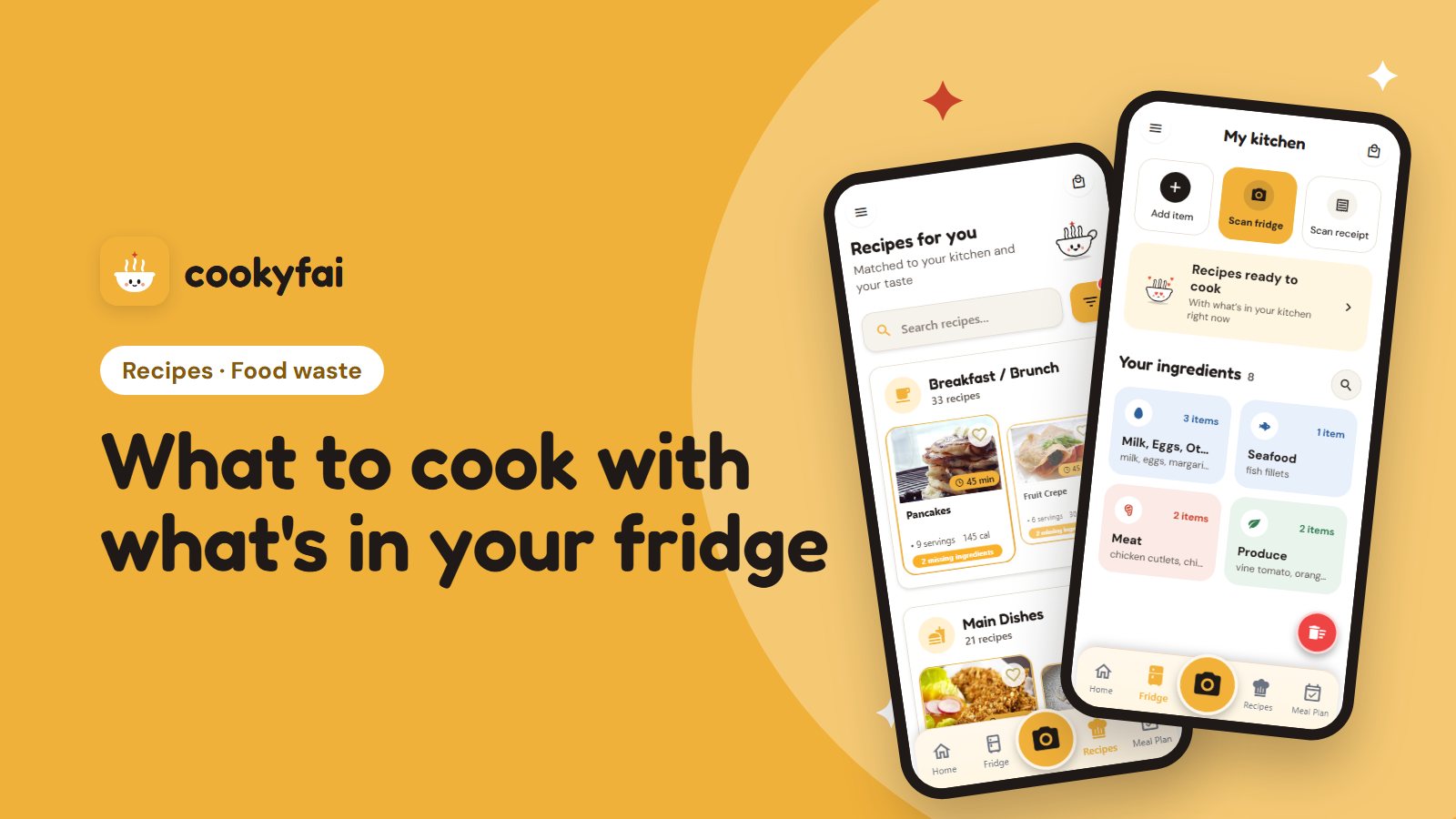
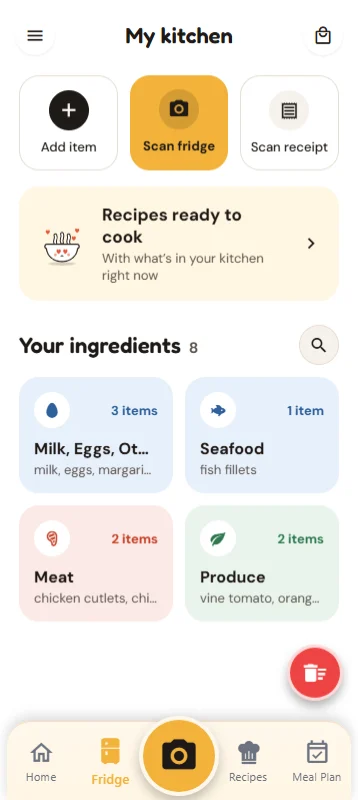
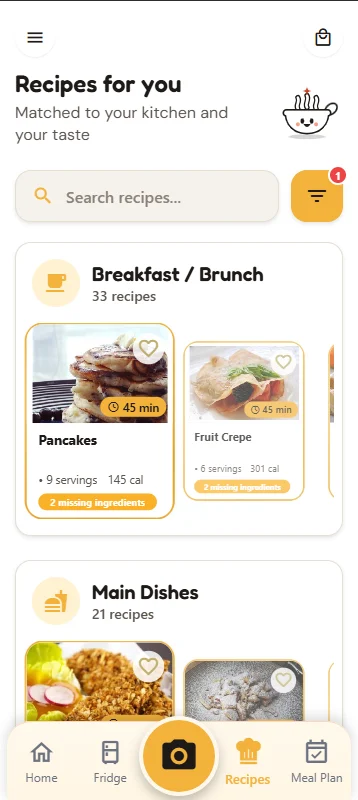
The method above works, but it still takes a few minutes of thinking every evening. That's the job Cookyfai was built for. Point your phone's camera at your fridge shelves or a grocery receipt, and Cookyfai lists the ingredients you have. It then suggests recipes that use them, filtered for your diet, allergies, cooking time and spice level.
Each recipe shows whether you're ready to cook or how many items are missing. Missing items go straight to your shopping list. You get the benefits of cooking from your fridge without the inventory work.
The takeaway
Cooking from your fridge is a skill, not a talent:
- List what you have, and what needs using first.
- Pick a protein and a base.
- Use a forgiving format: stir-fry, frittata, bowl, soup or pasta.
- Balance salt, acid, fat and heat.
- Check it fits your diet.
Try it tonight with whatever is on your middle shelf. Once you want suggestions on demand, see what Cookyfai's free plan can do with a photo of your fridge.