Eating more protein is one of the most common nutrition goals, whether you want to build muscle, stay full for longer or support weight loss. Hitting that goal day after day is harder than it sounds. Most people don't fail for lack of willpower. They fail because there's no plan, so dinner ends up being whatever is quickest.
Below you'll find a simple, realistic high-protein meal plan for a full week. Use it as it is, or as a starting point for your own.
How much protein do you need?
Common guidelines suggest about 0.8 g of protein per kg of body weight per day as a minimum for most adults. People who train regularly or are trying to keep muscle while losing weight often aim higher, somewhere around 1.2 to 1.6 g per kg.
For example, someone who weighs 70 kg might aim for:
- about 56 g a day at the minimum guideline, or
- about 85–110 g a day on a higher-protein plan.
Spread across three meals and a snack, 100 g of protein is roughly 25–30 g per meal. That's very achievable with ordinary food.
Everyone's needs are different. If you have a medical condition, kidney problems or are pregnant, talk to a doctor or registered dietitian before changing your diet.
The high-protein building blocks
Each meal in the plan is built from one or two of these. The figures are rough guides per typical portion:
| Food | Typical portion | Approx. protein |
|---|---|---|
| Chicken breast (cooked) | 120 g | 35 g |
| Greek yoghurt (plain) | 200 g | 18–20 g |
| Eggs | 2 large | 12–13 g |
| Tinned tuna (drained) | 1 small tin | 20–25 g |
| Lentils (cooked) | 200 g | 17–18 g |
| Firm tofu | 150 g | 18–22 g |
| Cottage cheese | 150 g | 16–18 g |
| Salmon fillet (cooked) | 120 g | 25–28 g |
The 7-day high-protein meal plan
The plan aims for about 100 g of protein a day. It reuses ingredients across several days, so your shopping list stays short and nothing goes to waste.
Monday
- Breakfast: Greek yoghurt with berries, oats and a spoon of nut butter
- Lunch: Chicken, rice and roasted vegetable bowl
- Dinner: Salmon with potatoes and green beans
- Snack: Two boiled eggs
Tuesday
- Breakfast: Three-egg omelette with spinach and feta, plus toast
- Lunch: Leftover salmon and potato salad with yoghurt dressing
- Dinner: Lentil and vegetable curry with rice
- Snack: Cottage cheese with cucumber
Wednesday
- Breakfast: Overnight oats made with milk and Greek yoghurt
- Lunch: Leftover lentil curry
- Dinner: Chicken stir-fry with peppers, broccoli and noodles
- Snack: A handful of roasted chickpeas
Thursday
- Breakfast: Scrambled eggs on wholemeal toast
- Lunch: Tuna, bean and sweetcorn salad
- Dinner: Tofu and vegetable traybake with a peanut sauce
- Snack: Greek yoghurt with honey
Friday
- Breakfast: Greek yoghurt with granola and fruit
- Lunch: Chicken wrap with hummus and salad
- Dinner: Turkey or bean chilli with rice
- Snack: Cheese and an apple
Saturday
- Breakfast: Shakshuka (eggs baked in spiced tomato sauce) with bread
- Lunch: Leftover chilli in a baked potato
- Dinner: Homemade burgers (beef, chicken or bean) with salad
- Snack: Protein smoothie: milk, banana, oats and peanut butter
Sunday
- Breakfast: Cottage cheese pancakes with berries
- Lunch: Big omelette or frittata with whatever vegetables are left
- Dinner: Roast chicken with vegetables (cook extra for Monday's lunch)
- Snack: Boiled eggs or Greek yoghurt
Make it work for your diet
Vegetarian: swap chicken and fish for eggs, Greek yoghurt, cottage cheese, tofu, tempeh, lentils and beans. Eggs and dairy make 100 g a day straightforward.
Vegan: build meals around tofu, tempeh, seitan, lentils, chickpeas, edamame and soy milk. Combining legumes with grains over the day helps cover all the essential amino acids.
Pescatarian: use salmon, tuna, prawns and white fish in place of chicken. Tinned fish is an inexpensive way to add 20 g or more to lunch.
Dairy-free: replace yoghurt and cottage cheese with soy yoghurt, tofu or an extra egg.
Tips that make high-protein eating easier
- Cook protein in batches. Roast a tray of chicken thighs or cook a pot of lentils on Sunday and use them in three different meals.
- Start the day with 25 g or more. Breakfast is where most people fall short. Eggs or Greek yoghurt fix that quickly.
- Keep easy snacks visible. Boiled eggs, yoghurt pots and roasted chickpeas beat crisps when they're the first thing you see.
- Don't forget fibre. Vegetables, beans and whole grains keep a high-protein diet balanced.
- Track for a week. You don't have to count forever, but a week of tracking shows how much protein you actually eat.
Plan and track it automatically
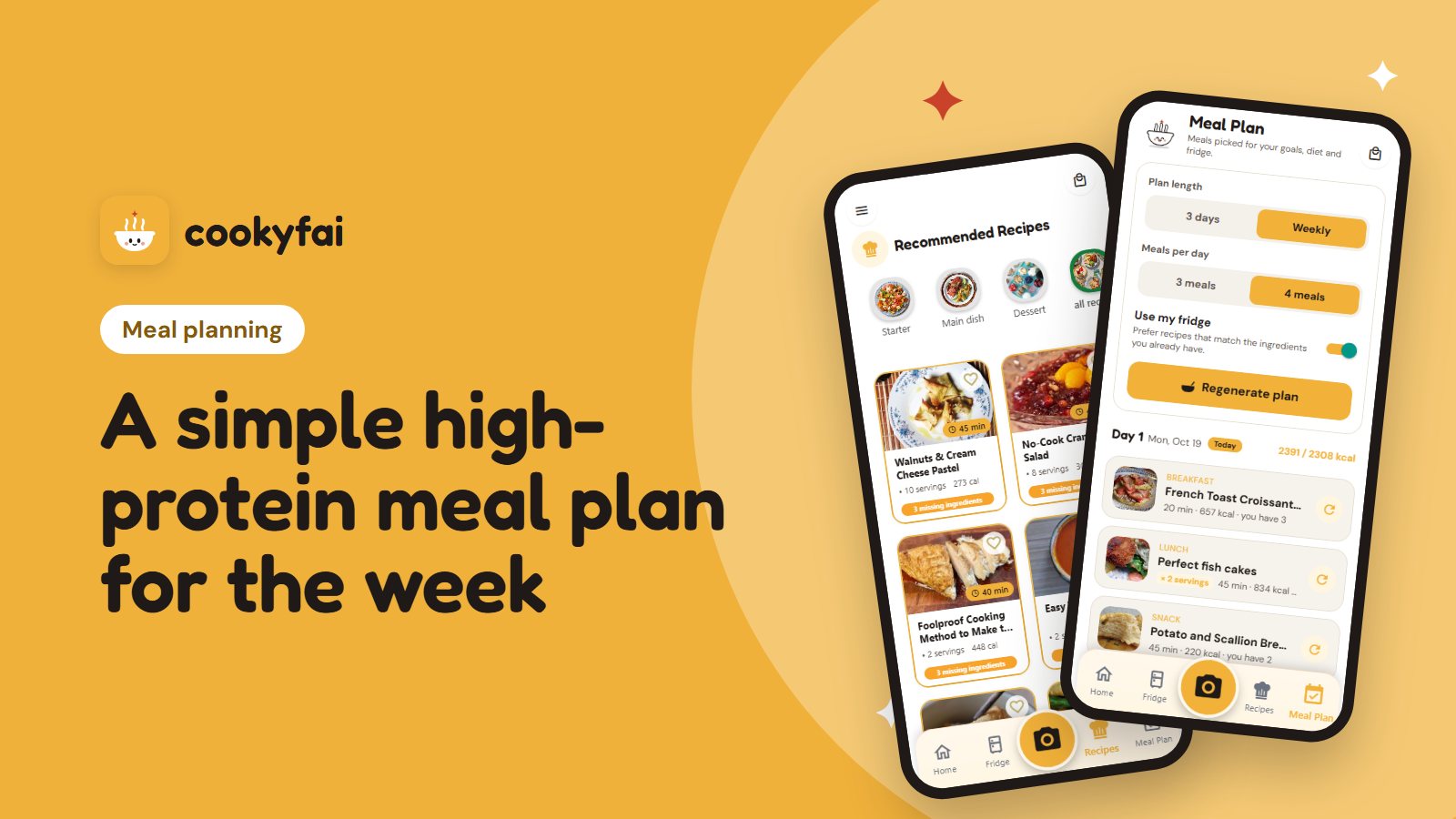
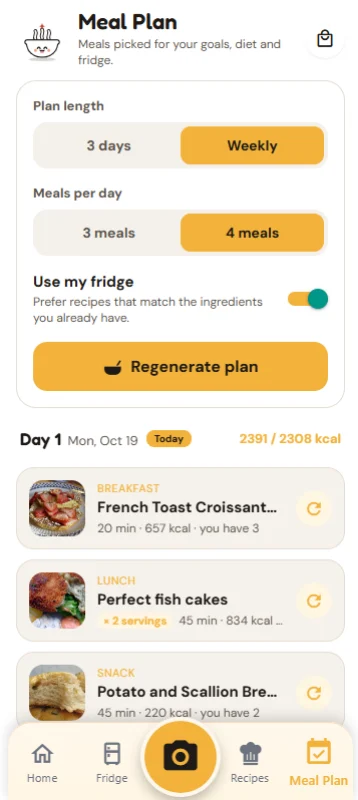
Writing a plan is the easy part. Sticking to it and knowing whether you hit your target is harder. Cookyfai builds a weekly meal plan around your goals and what's already in your fridge. It respects your diet and allergies, and adds missing ingredients to your shopping list.
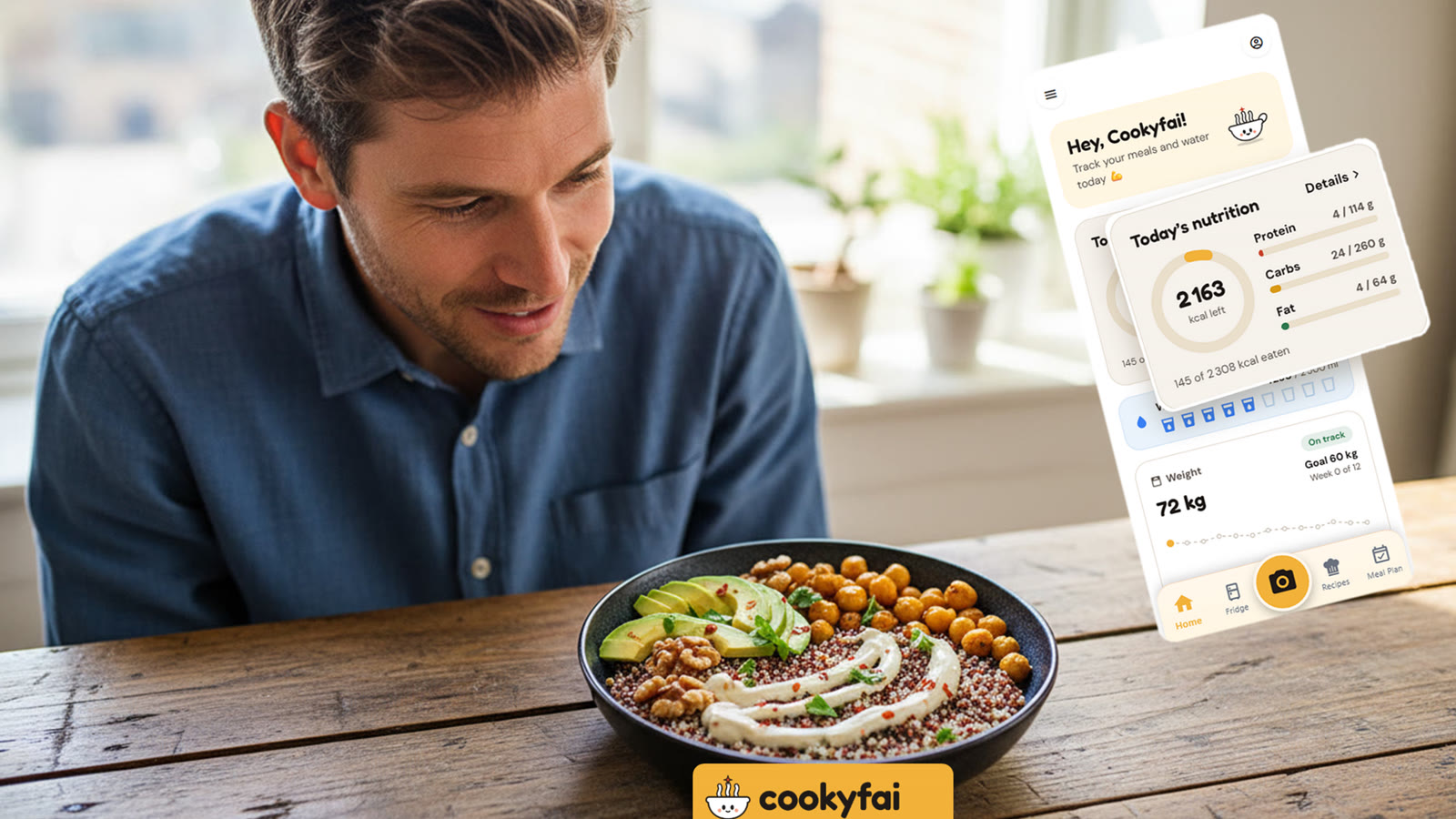
To track, take a photo of your plate and Cookyfai estimates its calories, protein, carbs and fat in seconds. Your daily protein goal fills up on a simple dashboard, so you can see at a glance whether you need an extra snack.
The takeaway
- Aim for roughly 25–30 g of protein per meal if you want around 100 g a day.
- Build meals from a short list of high-protein staples.
- Batch cook, reuse ingredients and keep protein snacks ready.
- Adapt the plan to your diet instead of following it rigidly.
Want a plan built for your goals instead of a generic one? Start with Cookyfai for free.